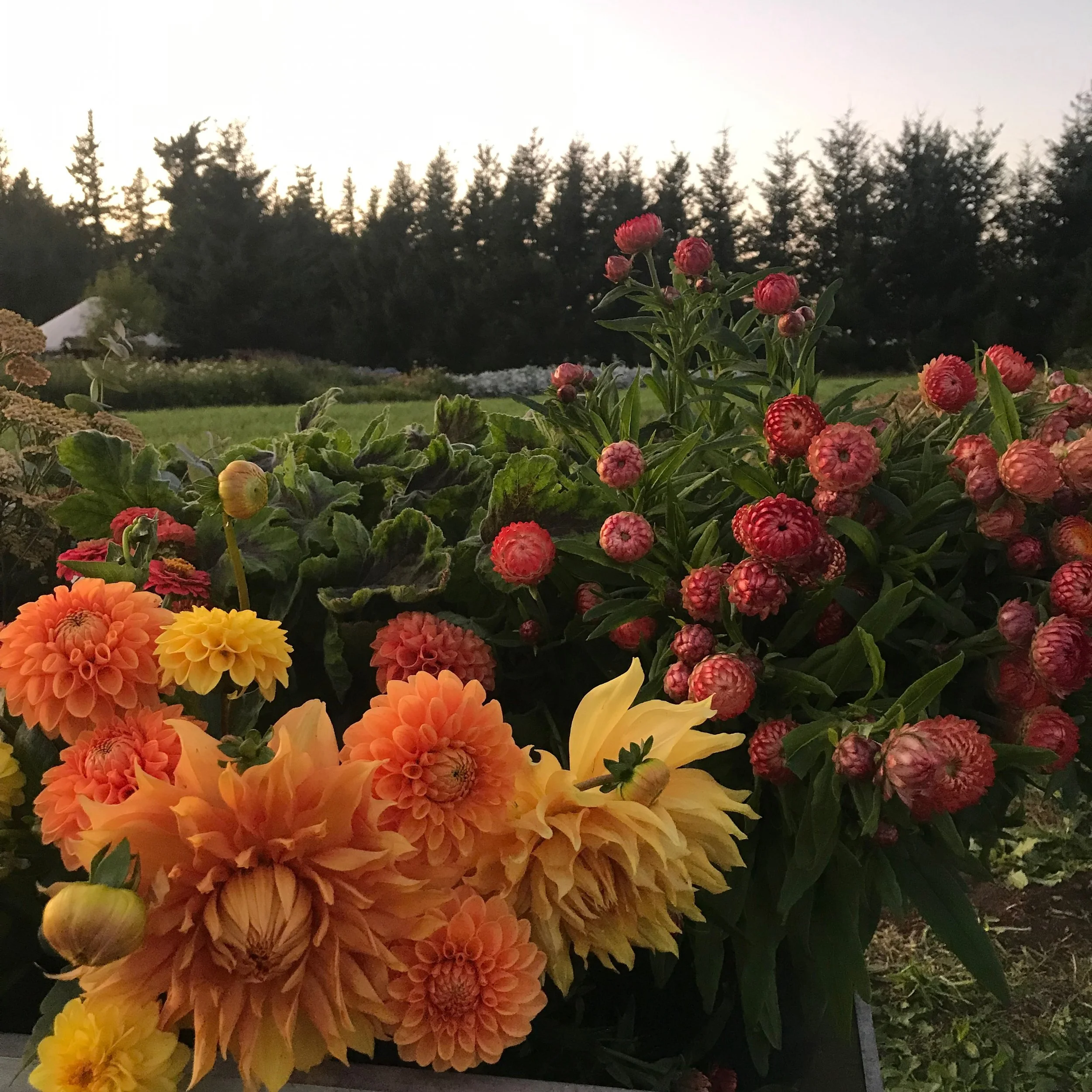

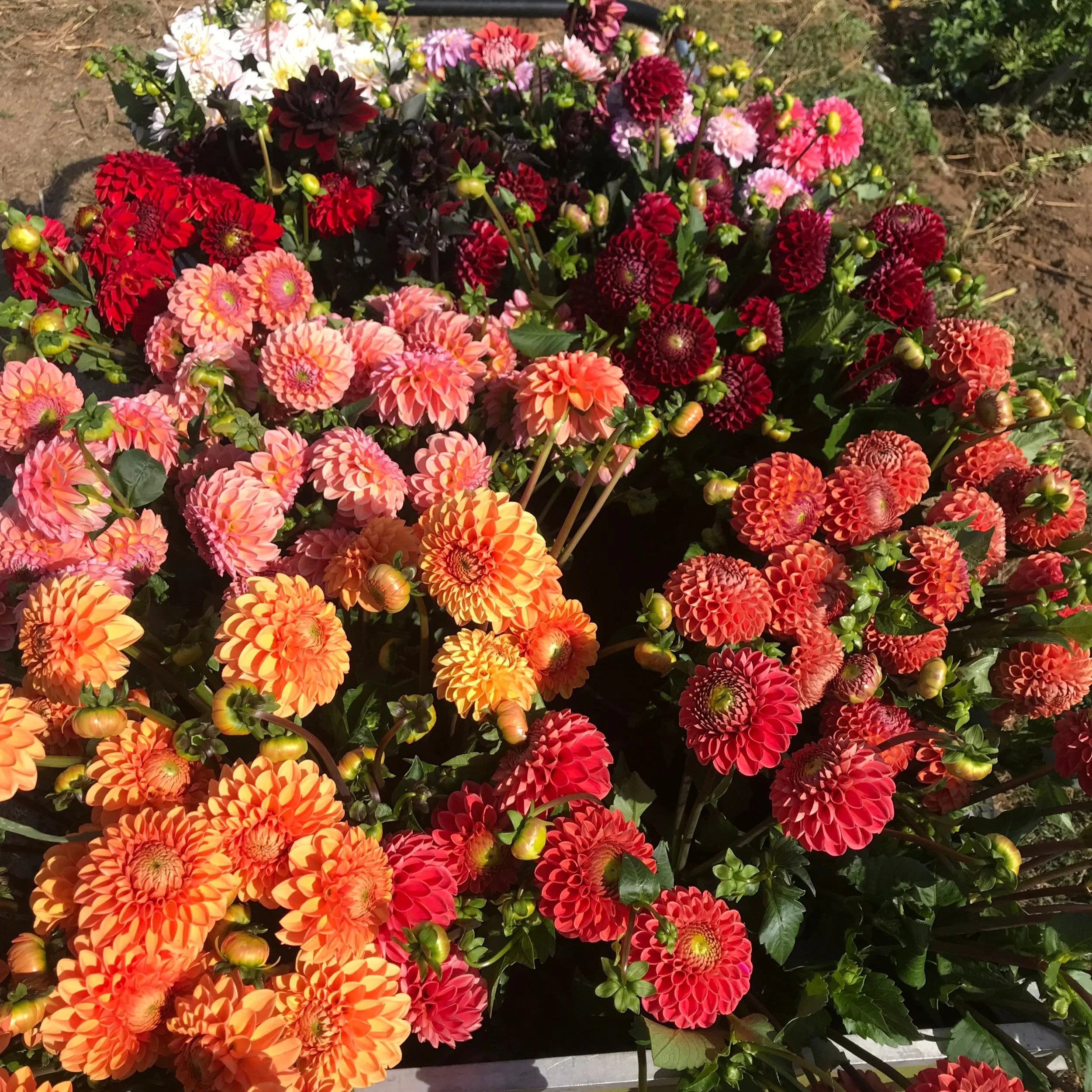
Dahlia Grow Guide
Planting
-

In the Ground
Dahlias thrive with soil temps of 60 degrees F or warmer and good drainage. Sprouts emerging before the last frost will frost-kill. Add compost for heavier soil types. Plant dahlias on their sides in holes 4-6” deep. Spacing: 9” pompon, 12” medium, 18” dinnerplate. Cover completely. Water AFTER sprouts have appeared 3-5 weeks after planting. Exception: hot/dry conditions may need a small amount of soil moisture to get started.
-
In Containers
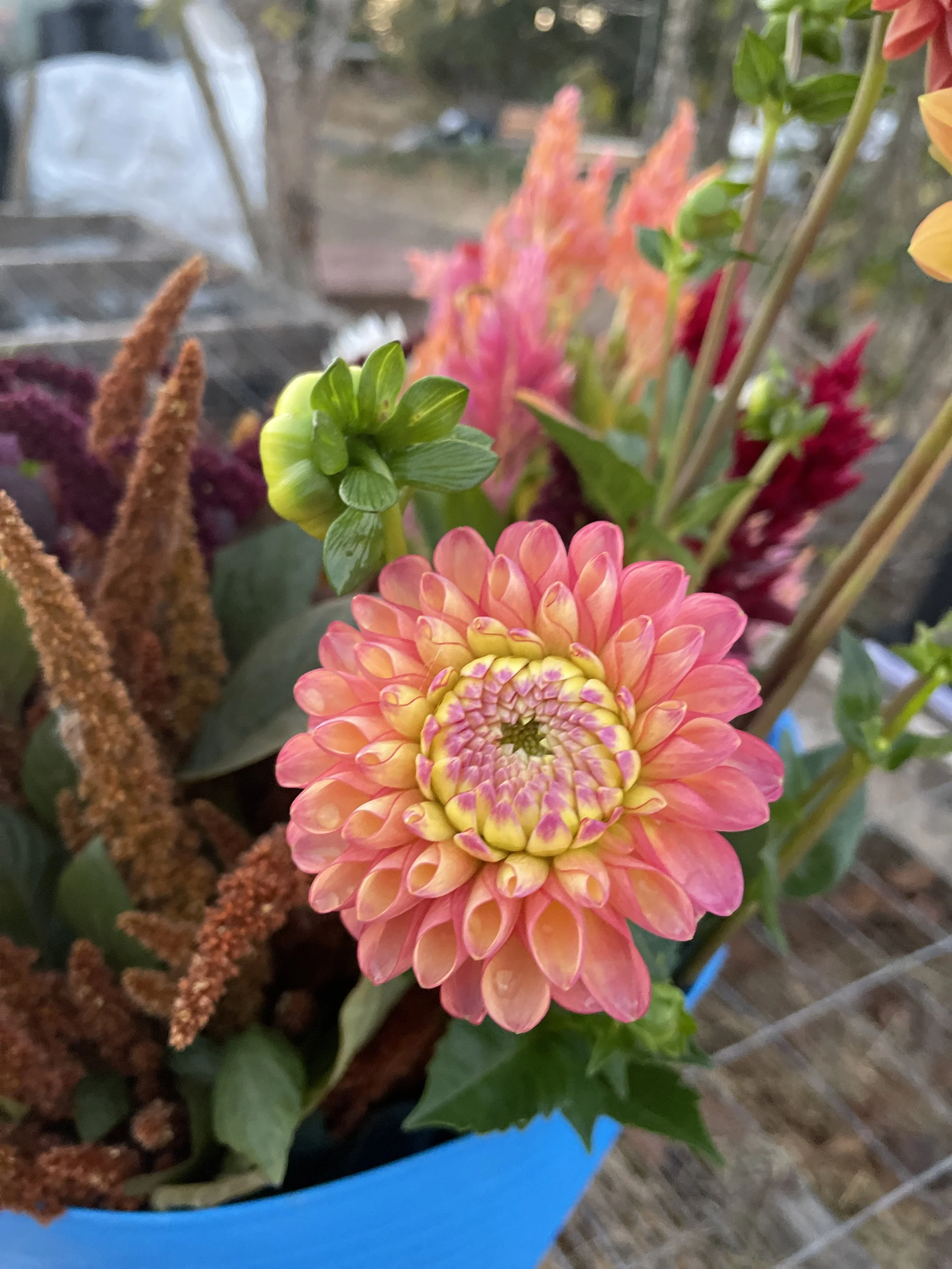
Dahlias do best in the ground, but can be grown in containers. We recommend pots at least 15” x 15” or larger. Fill containers with garden soil or 2/3 garden soil and 1/3 potting soil (Potting soil alone may dry out too quickly, have too much fertilizer, etc.). Keep soil slightly damp, not overly wet or tubers may rot. Once dahlias have sprouted, water regularly, up to 1-2 times per day. You may need to fertilize every 2 weeks for optimum growth.
-
Starting Indoors
Dahlias can be started up to 6 weeks early indoors before transplanting outside after the last frost. Start tubers in slightly damp potting soil, peat moss, or a mix. DO NOT OVERWATER. plant 2-3” deep, keep warm (70+ degrees F), and provide 8+ hours of light once sprouts emerge. Harden plants off before transplanting outdoors after the last frost date when plants are 12” or less (pinch back if necessary). Plant tuber 6” deep. Water to help plants root in.
Summer Care
-
Water
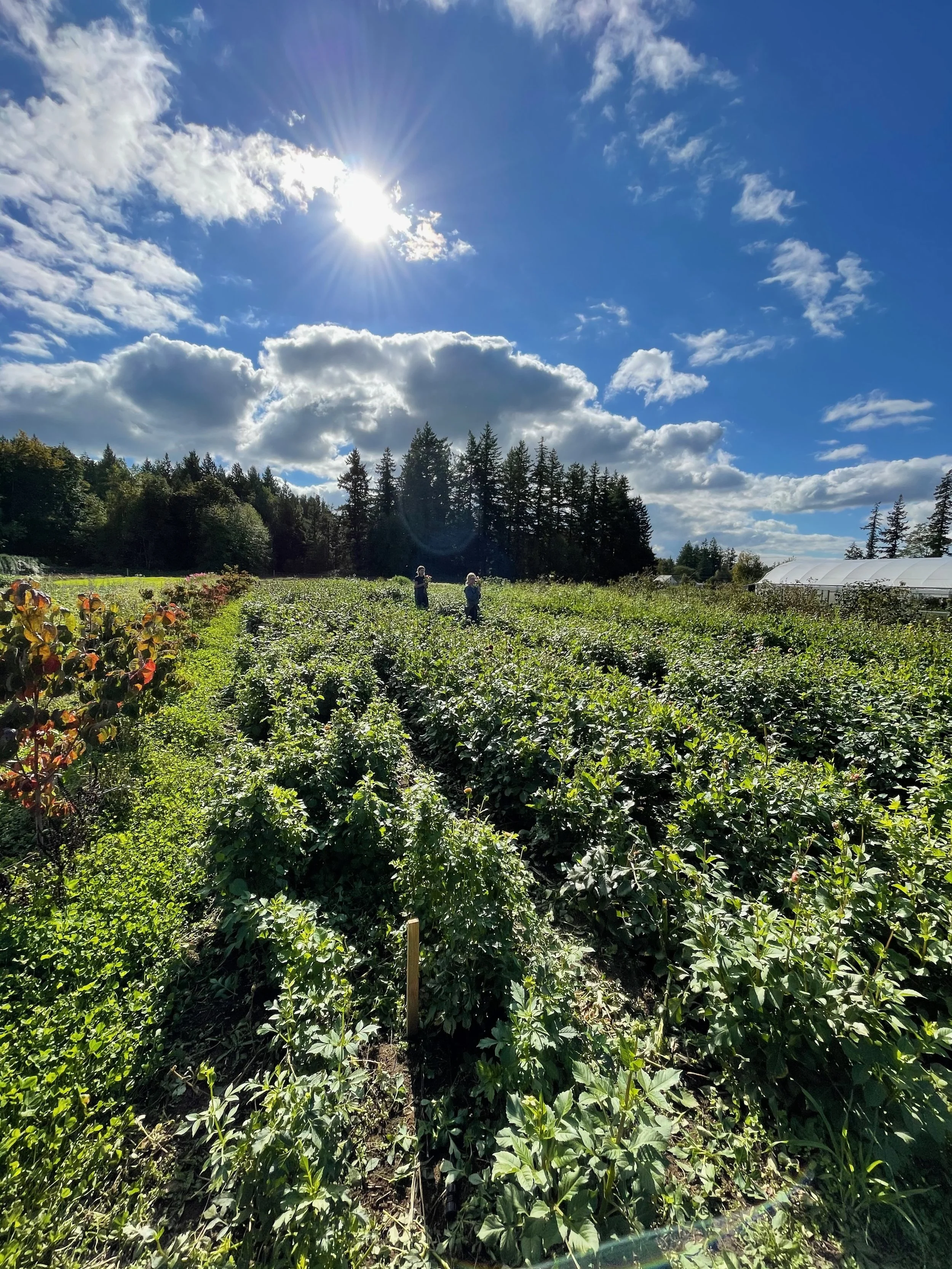
Once dahlias are up and established, you can start watering them regularly. In the heat of summer, we water around 20-30 minutes per day at the base of each plant, but this can vary according to heat and soil type. Cooler: less water, heavier soil: less frequently.
-
Fertilize
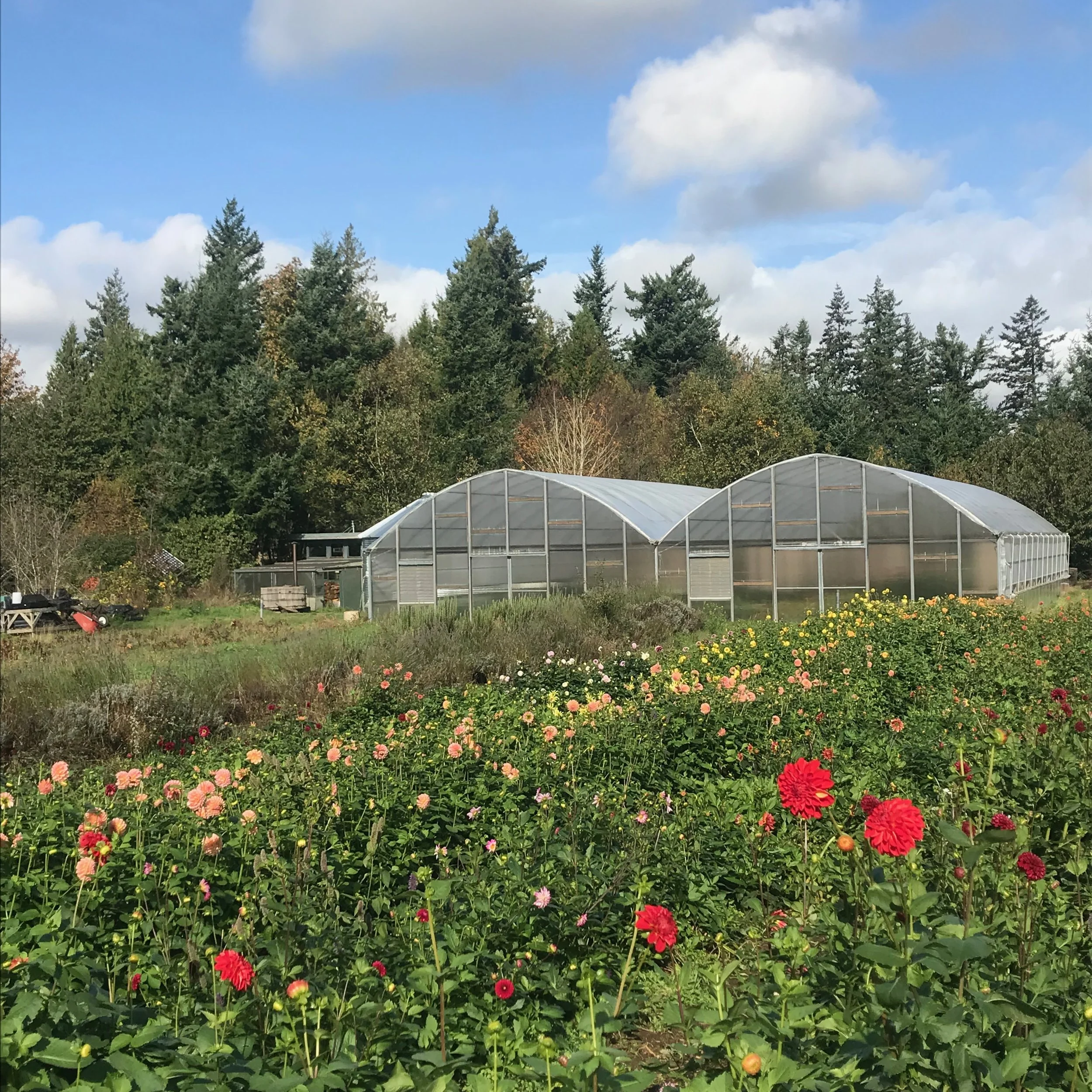
We recommend adding compost, aged manure or another low nitrogen fertilizer to the soil. Bloom fertilizers that are lower in nitrogen and higher in phosphorus and potassium work great. If desired, you can add more fertilizer once a month to keep stems strong and blooms blooming.
-
Pinch & Weed
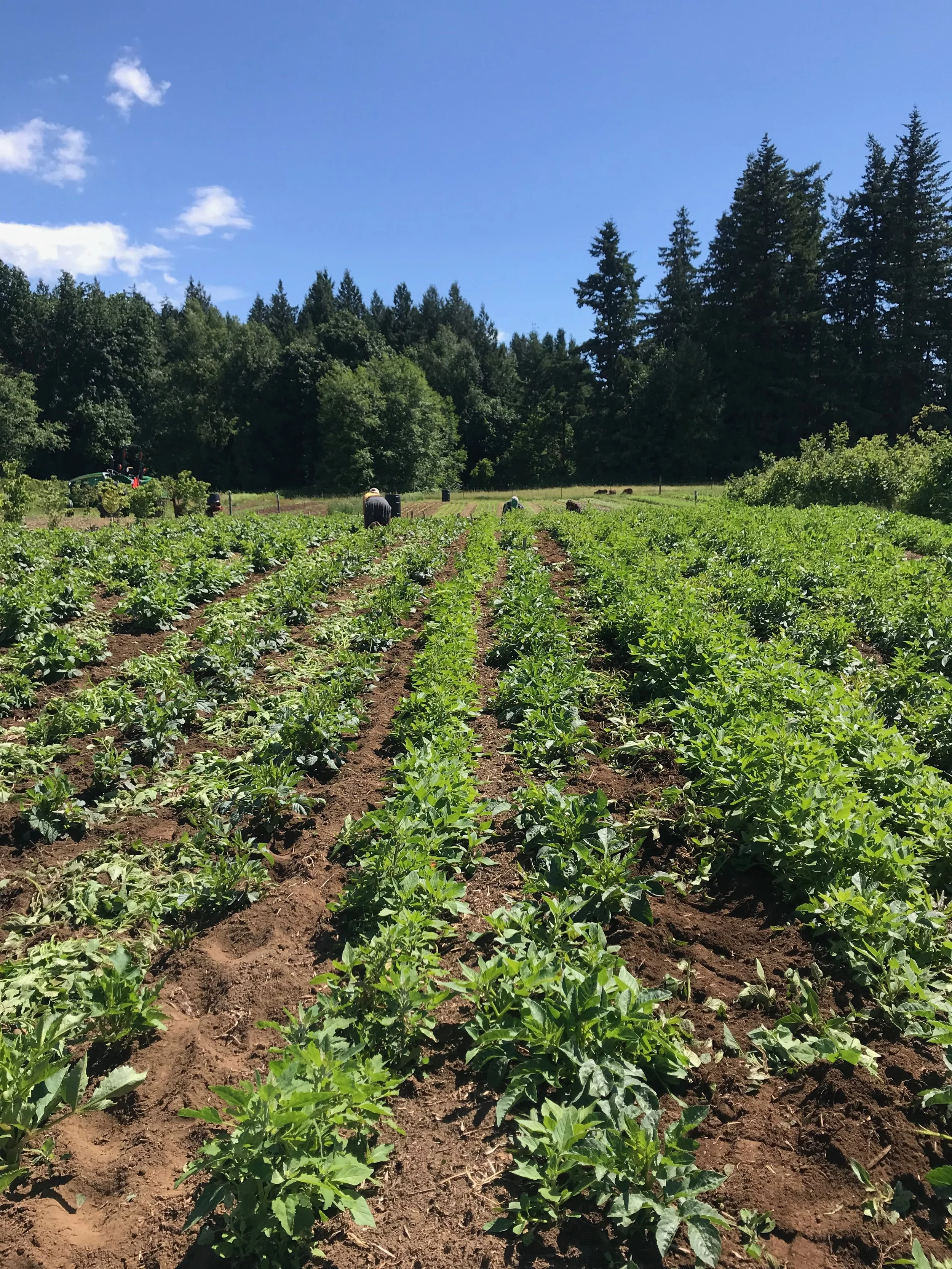
When plants are 18-20” tall, you can pinch out the center shoot above the third set of leaves to encourage branching and longer, thinner stems for cutting. For vigorous plants, keep the bases weeded by hand or hoe.
Fall & Winter Care
-
Dig
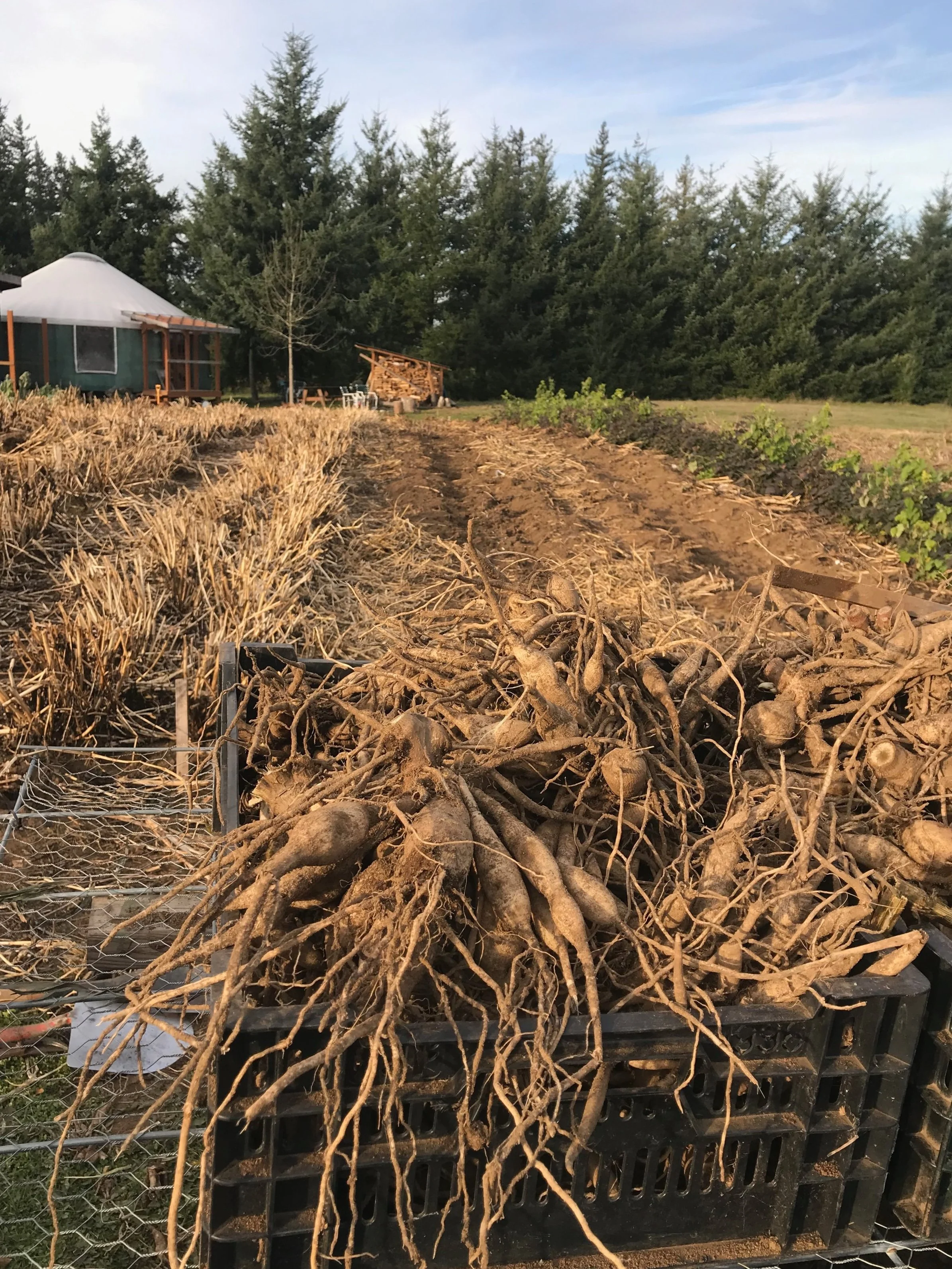
If you live in zone 8 and above, you may be able to leave your dahlias in the ground if it does not freeze to tuber level: cut stems down, cover with plastic (optional) and mulch. If you live in a colder area, dahlias will likely freeze if left in the ground: after a killing frost, cut stems to 6” and lift carefully with spade/pitchfork. Spray off and air-dry.
-
Divide
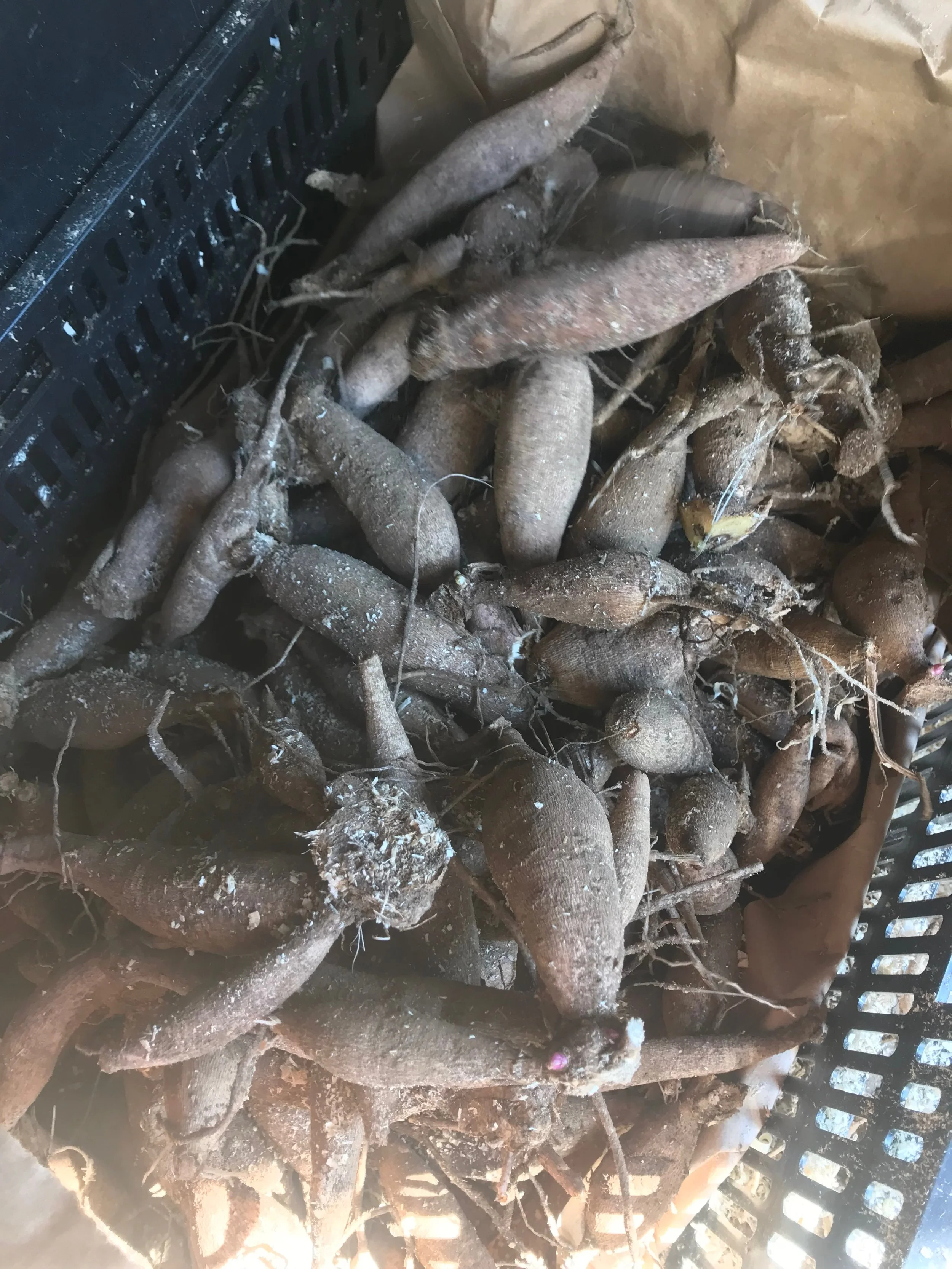
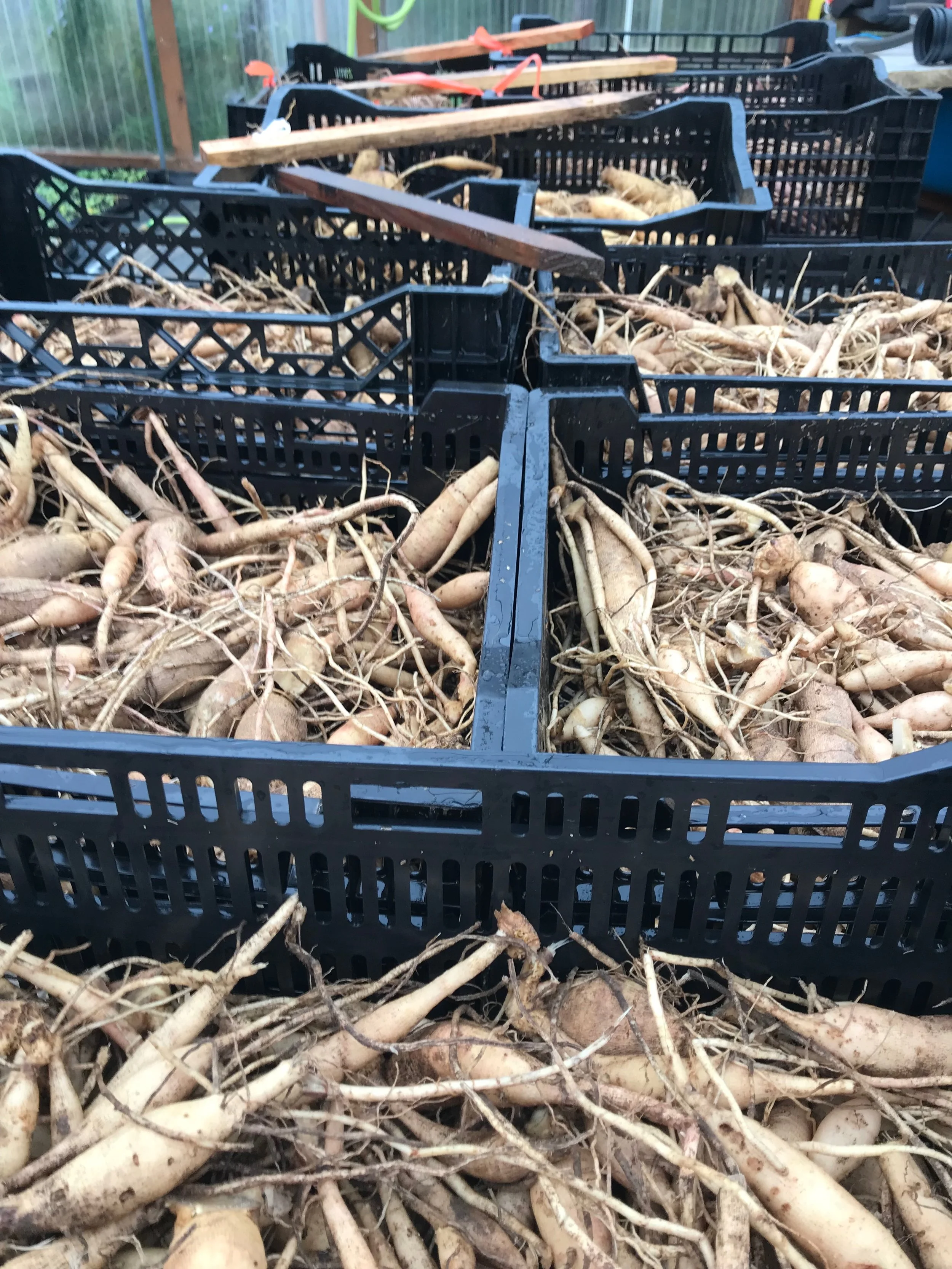
Dividing can begin in fall or spring. Using a sharp knife, saw or snips, cut the stems low (1” or less) and cut tubers apart. It may be helpful to cut clumps in half to get started. Make sure each tuber or planting clump has at least one eye. Eyes are located on the central stem(s) of the tuber clump.
-

Store
Slightly dampen storage medium (peat moss, wood shavings, or saw dust work). Line crates or cardboard boxes with paper and layer in storage medium and tubers. Store at around 40-50 degrees Fahrenheit. Check for dehydration during storage and add a little water if tubers are shriveling.